Sep 9, 2026Industry News
Press or Weld? Choosing the Right Captive Nut for Sheet Metal
Compare self-clinching nuts and weld nuts by sheet material, installation process, joint performance and inspection needs before specifying a sheet metal assembly.
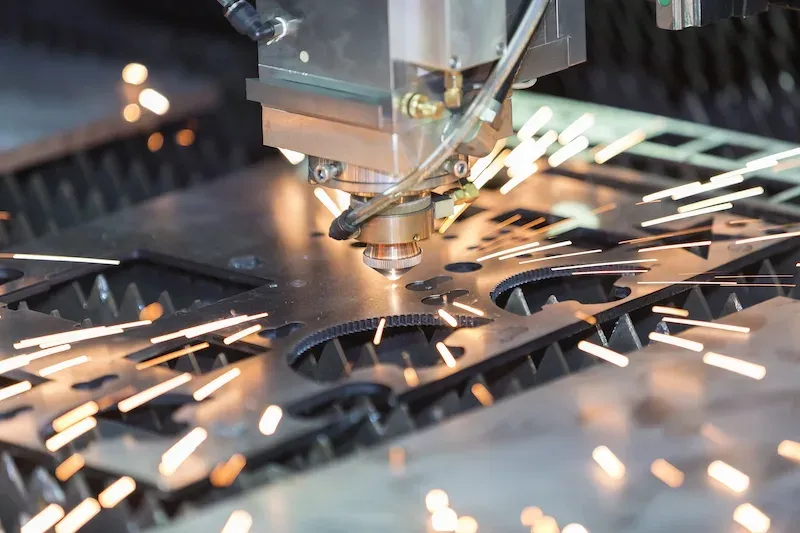
A captive thread in thin sheet can look like a small drawing detail, yet it often determines the tooling, finishing sequence, inspection plan and rework risk of the whole assembly. The useful question is not simply whether a self-clinching nut or a weld nut is “stronger.” It is which installation method fits the sheet material, access, production volume and expected failure mode.
The short answer
Choose a self-clinching nut when the sheet is sufficiently ductile, the hole can be controlled, parallel press access is available and you want to avoid welding heat and spatter. Choose a weld nut when the material is suitable for welding and the production line already has reliable projection-welding, fixturing and verification controls.
Neither option is universally better. A clinch nut depends on displaced parent material flowing into the fastener undercut. A weld nut depends on a repeatable weld joining the nut to the sheet. If either process is poorly matched to the sheet, a higher fastener strength rating will not rescue the joint.
Two different routes to the same captive thread
How a self-clinching nut works
A self-clinching nut, also called a press-in nut, is installed into a correctly sized punched or drilled hole with a controlled squeezing force applied parallel to the fastener axis. During installation, sheet material flows into the nut’s undercut while a knurled or serrated feature resists rotation. The reverse face can remain flush, which is useful where another component, gasket or visible panel must sit flat.
The mechanism has an important consequence: the sheet must be softer than the clinching feature and able to flow without cracking. Minimum sheet thickness, maximum sheet hardness, hole diameter, edge distance and installation force are product-family values, not rules that should be guessed from thread size. The specified fastener data must govern.
How a weld nut works
A weld nut is normally located on the sheet and attached by resistance projection welding. Formed projections or defined contact points concentrate current and heat so that weld nuggets develop between the nut and parent metal. The process can produce a robust captive thread, but it adds heat input, fixturing, electrode access and weld-control requirements.
Weld quality is influenced by material combination, coating, surface cleanliness, electrode condition, force, current and time. The process sequence also matters. Welding may disturb a protective coating, and spatter or distortion can affect the thread or nearby cosmetic surfaces if controls are weak.
Where the decision is really made
Joint principle — A self-clinching nut uses a mechanical interlock created by sheet material flowing into the undercut. A weld nut uses a metallurgical attachment created by projection welding.
Sheet requirement — Clinching needs material that is ductile enough to flow and softer than the fastener feature. Welding needs a material and coating compatible with the selected weld process.
Production equipment — Clinching needs a press with controlled, parallel squeezing force; in-die installation may be possible. Welding needs a suitable machine, electrodes, fixture and process monitoring.
Critical input — Hole size, sheet thickness, hardness and seating force govern clinching. Fit-up, projection condition, force, current, time and electrode condition govern welding.
Typical verification — A clinched joint is normally checked for seating, push-out and torque-out. A welded joint needs attachment, weld-quality, torque and destructive checks as required by the risk and quality plan.
These comparisons are a screening tool, not a substitute for a joint test. Geometry, service load and the actual sheet lot can change the result.
Choose by the sheet before choosing by the nut
The fastest way to narrow the decision is to start with the sheet specification. For a self-clinching design, confirm thickness, hardness, ductility and the condition around the hole. A burr, oversized hole or work-hardened edge can reduce material engagement. Stainless sheet may require a fastener series specifically designed for harder material; a standard clinch nut should not be substituted on appearance alone.
For a weld nut, confirm weldability and coating behavior. Zinc-coated steel is common, but coating thickness and contamination can alter electrical resistance and electrode life. Aluminum and mixed-material assemblies require a process review rather than an assumption that a familiar steel weld schedule will transfer.
Material compatibility continues after installation. Exposure, galvanic potential, temperature and corrosion protection all influence the final choice. For a practical starting point, see SENOTECH’s fastener material guide.
The lowest piece price may create the higher installed cost
Comparing nut prices alone hides most of the production economics. A complete cost comparison should include hole preparation, equipment time, tooling wear, operator handling, energy, cleaning, inspection, rework and scrap.
Self-clinching nuts can be attractive where a press operation already exists or where insertion can be integrated into a stamping die. They remove the welding station from the route and avoid post-weld spatter cleanup. However, that advantage disappears if hole control is poor, the press cannot maintain parallel force or the sheet requires a special fastener series.
Weld nuts can be efficient in a mature projection-welding cell with automatic feeding and process monitoring. They may also suit assemblies where the surrounding geometry favors welding access over pressing access. Costs rise when electrode maintenance, coating removal, thread protection, rework or additional corrosion treatment are overlooked.
A useful quotation therefore compares cost per accepted assembly, not cost per nut.
Ask for the failure mode, not one impressive number
“Which one is stronger?” is incomplete until the load direction and sheet behavior are defined. A bolted sheet-metal joint can fail by nut rotation, nut push-out, pull-through, thread stripping, local sheet deformation, weld separation or fatigue around the attachment area.
For self-clinching nuts, torque-out and push-out values are common reference points. They depend on the specific nut, sheet thickness, material and installation quality. For weld nuts, torque resistance alone does not describe peel, shear or fatigue behavior of the welded attachment. In both cases, the joint should be tested in representative material with the production installation process.
Also consider service events. Will technicians repeatedly remove the bolt? Can they apply an off-axis tool load? Is the joint exposed to vibration, thermal cycling or impact? These details may matter more than a laboratory comparison between two catalogue values.
Surface finish changes the answer
When the assembly will be painted, plated or powder coated, decide the installation stage early. Welding through or after a coating can affect weld consistency and damage local protection. Welding before finishing can simplify attachment but may require masking or thread protection during the later coating operation.
Self-clinching installation avoids a heat-affected zone, yet it is not automatically finish-neutral. Press tooling can mark a cosmetic surface, thick coatings can alter fit and installation after finishing can crack or displace the coating around the hole. The fastener finish must also be compatible with the sheet and service environment.
Build inspection around the process
A good drawing identifies the fastener. A good production plan also identifies what must be checked.
For a self-clinching nut, control:
• Fastener series and orientation
• Hole diameter, roundness, burr direction and edge distance
• Sheet thickness, hardness and local flatness
• Parallel installation force and complete seating
• Sampling for push-out or torque-out where the risk requires it
For a weld nut, control:
• Nut location, projection condition and fit-up
• Electrode alignment, force, current and weld time
• Electrode wear and surface cleanliness
• Attachment integrity, thread condition and surrounding distortion
• Destructive-test frequency defined by the quality plan
Do not use a bolt-running check as the only acceptance test. A thread can feel normal even when the attachment to the sheet is marginal.
A practical five-step decision path
- Freeze the sheet data. Record material grade, thickness range, hardness or temper, coating and hole-making method.
- Map the production access. Confirm whether both sides are available to press tooling, welding electrodes or only one side during final assembly.
- Define the service loads. Include tightening torque, push-out, pull-through, vibration, temperature and maintenance cycles.
- Compare the full process route. Include finishing sequence, automation potential, inspection, rework and takt time.
- Validate the real stack-up. Install samples with production-equivalent equipment and test the relevant failure modes.
When another captive fastener may fit better
The choice is not always limited to pressing or welding. A rivet nut can solve one-sided access or retrofit work. A cage nut or floating nut can absorb assembly misalignment. A formed or machined boss may suit thicker material or a part already receiving machining. Reviewing these alternatives early can prevent the captive nut from becoming an expensive workaround.
Information to include in an RFQ
• Drawing and annual quantity
• Thread size, class and bolt engagement
• Sheet grade, thickness, hardness or temper and finish
• Hole dimensions and installation access
• Required torque-out, push-out or other assembly tests
• Service environment and corrosion target
• Preferred installation equipment and cycle-time target
• PPAP, inspection report, sample or packaging requirements
Make the process choice before tooling locks it in
A self-clinching nut is usually the cleaner route when controlled holes, suitable ductile sheet and press access are available. A weld nut is often the better fit when weldable materials and a disciplined projection-welding process are already part of the line. The best design is the one whose attachment mechanism, inspection plan and finishing sequence all support the same production reality.
SENOTECH supports custom hardware and sheet-metal fastening components, including programs where standard fasteners must be adapted to material, geometry or assembly constraints. Explore our product range . To review your drawing and joint requirements, contact our engineering team.
Frequently asked questions
Can a self-clinching nut be used in stainless steel?
Yes, but only when the selected fastener series is approved for the sheet hardness and thickness. Standard carbon-steel clinch nuts are not universal substitutes for stainless applications.
Can a weld nut be installed after coating?
Sometimes, but the coating can change electrical resistance, create fumes or be damaged by heat. The coating, weld schedule and corrosion-restoration plan must be validated together.
Which option gives higher torque resistance?
There is no universal winner. Torque resistance depends on the exact fastener, sheet, installation quality and failure mode. Compare supplier data, then verify the production joint with representative samples.