Aug 20, 2026Industry News
Glass Clamps vs Glass Spigots: How to Choose for a Railing Project
Compare glass clamps and glass spigots by structure, installation, load, maintenance and cost to choose the right hardware for a safe glass railing.
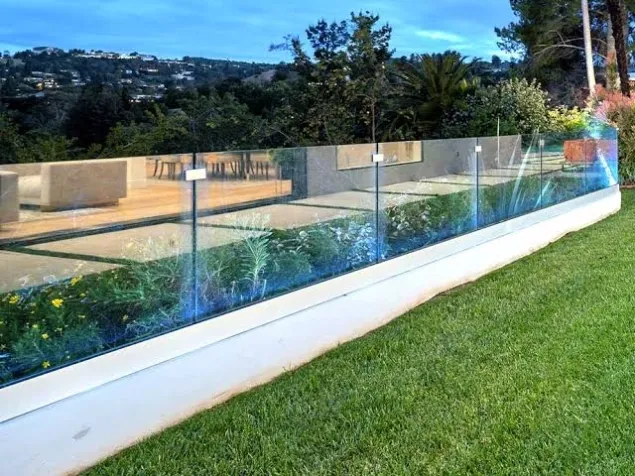
Frameless and semi-frameless glass railings depend on small hardware components to transfer loads safely into the supporting structure. Two of the most common choices are glass clamps and glass spigots. They can both secure toughened glass, but they create different visual effects, require different substrates, and suit different project conditions.
This guide compares glass clamps and glass spigots so architects, contractors, distributors and project buyers can choose a practical system before requesting quotations.
What Are Glass Clamps?
Glass clamps are compact metal fittings that grip the edge or side of a glass panel. Depending on the design, they may be fixed to a post, wall, square tube or round tube. Rubber gaskets sit between the metal and glass to prevent direct contact and distribute pressure.
Glass clamps are commonly used for balcony infill panels, stair railings, partitions, balustrades and pool fencing. They are available in different shapes and mounting configurations, including flat-back and curved-back versions.
What Are Glass Spigots?
Glass spigots are floor-mounted supports that hold the lower edge of a glass panel. They are often used in frameless pool fencing, balconies and outdoor railings because they leave most of the glass edge unobstructed.
Spigots may be base-plated and mechanically anchored to the substrate, or core-drilled into concrete. Some designs use friction adjustment, while others require holes or cut-outs in the glass. For more details, see our guide.
Glass Clamps vs Glass Spigots: Key Differences
- Structural layout
Glass clamps normally connect panels to posts, walls or frames. The surrounding structure carries the load, so clamp spacing and post strength must be coordinated.
Glass spigots support panels from below. Each panel normally uses two or more spigots, and the floor or concrete base must resist the forces transferred through the anchors.
- Appearance
Clamps create a semi-frameless look because posts or rails are often visible. This can be an advantage when the design needs clear structural definition or when an existing frame must be reused.
Spigots create a more open, frameless appearance. They are concentrated at the bottom of the glass and preserve wide sightlines around pools, terraces and commercial spaces.
- Installation
Clamp systems can be convenient when suitable posts or structural members are already available. Installers must select the correct clamp body, backing shape, gasket and fastener for the mounting surface.
Base-mounted spigots require accurate setting-out and reliable anchors. Core-drilled spigots need properly sized holes, grout and sufficient concrete depth. In both cases, the glass must be aligned before final tightening.
- Glass compatibility
Never select hardware by appearance alone. Confirm glass thickness, panel dimensions, hole or cut-out requirements, edge distances and the hardware manufacturer's test data.
Many clamp and spigot models are designed for specific toughened or laminated glass thicknesses. Using an incorrect gasket or forcing a fitting onto unsuitable glass can cause uneven pressure and local damage.
- Environment and corrosion resistance
Indoor dry environments have different requirements from coastal, poolside or chemical-exposure locations. Stainless steel 304 is widely used, while stainless steel 316 is generally preferred for more corrosive outdoor and coastal conditions.
Surface finishing, drainage and routine cleaning also affect service life. Read our maintenance guide
- Maintenance
Glass clamps should be checked for loose fasteners, damaged gaskets, movement and signs of corrosion. Water should not remain trapped between the fitting and surrounding surfaces.
Spigot systems require inspection of base anchors, covers, drainage areas and glass alignment. Pool chemicals and salt deposits should be rinsed away regularly with clean water.
- Project cost
Clamp systems may be economical when posts or frames are already part of the design. Costs depend on the number of clamps, post material, drilling and installation time.
Spigot systems often use fewer visible components, but each support is substantial and the substrate preparation can add cost. The lowest unit price does not always produce the lowest installed cost.
Which System Should You Choose?
Choose glass clamps when:
• The railing includes posts, tubes or wall mounting points.
• A semi-frameless appearance is acceptable.
• The project needs flexible side-mounting options.
• Existing structural framing can support the glass panels.
• Straightforward component replacement is important.
Choose glass spigots when:
• The design priority is a clean, frameless appearance.
• The glass will be supported from a suitable floor or concrete base.
• Uninterrupted sightlines are important.
• The application is pool fencing, balconies or premium architectural railing.
• The project team can control anchoring, alignment and waterproofing carefully.
A Practical Buyer Checklist
Before ordering either system, send the supplier:
• Project application and installation location
• Indoor, outdoor, coastal or poolside environment
• Glass type, thickness, width and height
• Panel weight and design loads
• Post, wall or floor substrate details
• Mounting method and anchor requirements
• Material grade and surface finish
• Drawings showing holes, cut-outs and edge distances
• Required testing, certificates and local code compliance
• Quantity, packing and delivery schedule
Do not assume that one fitting suits every railing. Final selection should be reviewed by a qualified designer or engineer against the applicable building code and project loads.
Why Source Glass Hardware as a Complete System?
Buying clamps, spigots, gaskets, covers and anchors as a coordinated package reduces compatibility problems. It also makes samples, finish matching, inspection and replacement easier.
SENOTECH supplies glass hardware for architectural and industrial projects, with material, finish and dimensional options for different environments. Explore our product range or contact us to discuss drawings and purchasing requirements.
Conclusion
Glass clamps are a strong choice for post-supported or framed railings, while glass spigots are ideal when a frameless appearance and floor mounting are priorities. The right decision depends on the glass specification, structural support, installation environment, maintenance plan and local code requirements.